Sashimi. What's the difference between Sashimi and Sushi? Sashimi is thinly sliced raw meat—usually fish, such as salmon or tuna—that is served without rice. Sushi is not raw fish, but rather vinegared rice.
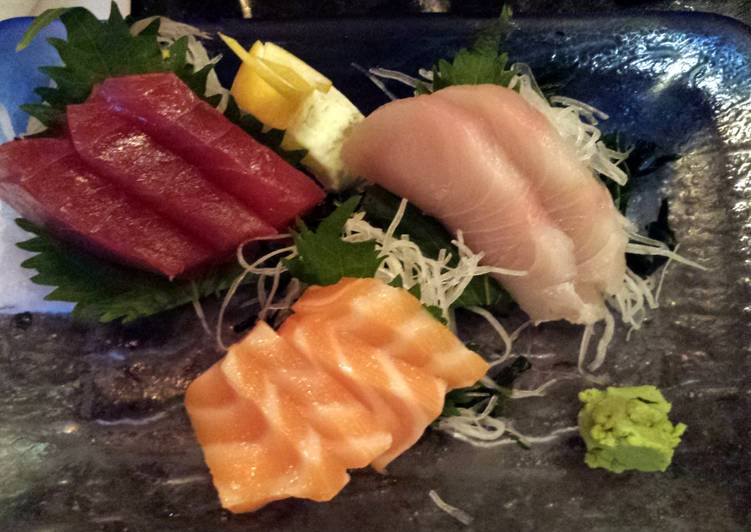 Sashimi dishes are available at many types of restaurants and at most izakaya.
Sushi and Sashimi are often confused, understanding the difference can help when placing an order.
Sushi is any pairing of ingredients with vinegared rice.
You can have Sashimi using 6 ingredients and 4 steps. Here is how you achieve it.
Sashimi dishes are available at many types of restaurants and at most izakaya.
Sushi and Sashimi are often confused, understanding the difference can help when placing an order.
Sushi is any pairing of ingredients with vinegared rice.
You can have Sashimi using 6 ingredients and 4 steps. Here is how you achieve it.
Ingredients of Sashimi
- It's 3 slice of Tuna.
- You need 3 slice of Salmon.
- It's 3 slice of Yellowtail.
- Prepare 2 grams of Ginger.
- Prepare 2 grams of Wasabi.
- You need 1/2 cup of soy sauce.
The Best Sashimi Sauce Recipes on Yummly Fluke Sashimi In Jalapeno Sauce, Soy Miso Tuna Sashimi, Spiralized Sushi Bowl With Salmon Sashimi And Ginger Miso Dressing. Sashimi is an important element in Japanese cuisine Sashimi is usually also served with soy sauce and wasabi, and some cooks add ground ginger root to the soy sauce for an extra dimension of flavor. Sashimi by definition is made from fresh, raw fish or seafood.
Sashimi step by step
- Buy fresh fish at Holefoods.
- Keep it fresh, cut it wisely.
- Serve it cold.
- Enjoy.
Traditionally salmon was not used for sashimi, because salmon lives in salt and in fresh water. noun sashimi (usually uncountable, plural sashimis). Автоматический перевод en Food so prepared can also be served with soy sauce and garnishes like a sashimi. Sashimi, specialty of Japanese cuisine, fresh fish or other seafood served raw. The fish is commonly sliced paper thin or cut into small cubes or strips, according to the nature of the fish. Sashimi definition is - a Japanese dish of thinly sliced raw fish. Examples of sashimi in a Sentence.